I have been writing about research studies of the nutritional value, safety, preservation and possible benefits of feeding a raw diet for more than 5 years. This research, conducted by multiple academic groups, has led to improved understanding of raw foods, to the development of safer and more nutritious products, and has increased our appreciation of how different degrees of food processing can impact the nutrient value and integrity of pet foods. Given the large amount of information that is available and the increasing number of dog owners who are considering feeding raw, I thought it was time for The Science Dog to provide a summary of what we currently know.

The Current Science:
- Nutrient Balance: A common argument that has been raised against raw diets is that they may not be properly formulated and have the potential for causing nutrient imbalances when fed to dogs. Early studies of homemade raw diets and of some commercial products did show support for this claim. However, as the popularity (and market share) of raw foods has increased, commercially prepared products that meet standards for providing complete and balanced nutrition to dogs have proliferated. Similarly, there are a number of resources available through canine nutritionists for the purchase of balanced homemade raw or gently cooked recipes. However, despite these improvements, problems still exist. A recent study analyzed 31 commercially-produced frozen raw pet foods and found that a substantial proportion (up to 25 percent) had discrepancies between declared nutrient content on the label and the analyzed content. Most commonly, raw products were excessively high in fat and were either too low or too high in calcium and phosphorus (Nutritional Adequacy). Similarly, and sadly, case studies of severe nutrient imbalances in dogs fed raw diets continue to appear in the scientific literature (Puppy, Young Adult). Still, mislabeling is certainly not a problem that is unique to raw products (What’s in Your Food?).
- Digestibility: Proponents of raw feeding frequently state that raw foods are more digestible and provide more highly available nutrients than do thermally-processed foods. However, current evidence shows that raw diets are not necessarily more digestible than are moderately cooked (aka fresh-cooked) foods or even than some extruded kibbles (A Few Raw Facts). While thermal processing can cause a loss of nutrients and damage to food protein (more about this below), the quality of starting ingredients in a food are also important when assessing a food’s digestibility and nutrient availability (New Scoop).
- Risk of Contamination: To date, numerous studies, from unrelated laboratories have found that that frozen commercial raw dog foods are more likely to be contaminated with potentially harmful bacteria than are foods that have been thermally (heat) processed (The Raw Deal). Additional studies report that feces of dogs fed raw diets are more likely to carry zoonotic pathogens and to carry anti-microbial resistant organisms when compared with feces of dogs fed thermally-processed foods (Foodborne Pathogens, Anti-microbial Resistant).
- Freezing Effects: Some believe that keeping raw dog foods in a frozen state prior to feeding prevents microbial contamination. This has not been supported by evidence. A 2020 study found that a substantial proportion of commercially available frozen raw dog food contained levels of microbes that exceeded acceptable safety limits. Microbial contamination was detectable immediately upon thawing and microbial numbers continued to proliferate over several days, even when thawed foods were refrigerated properly (Frozen).
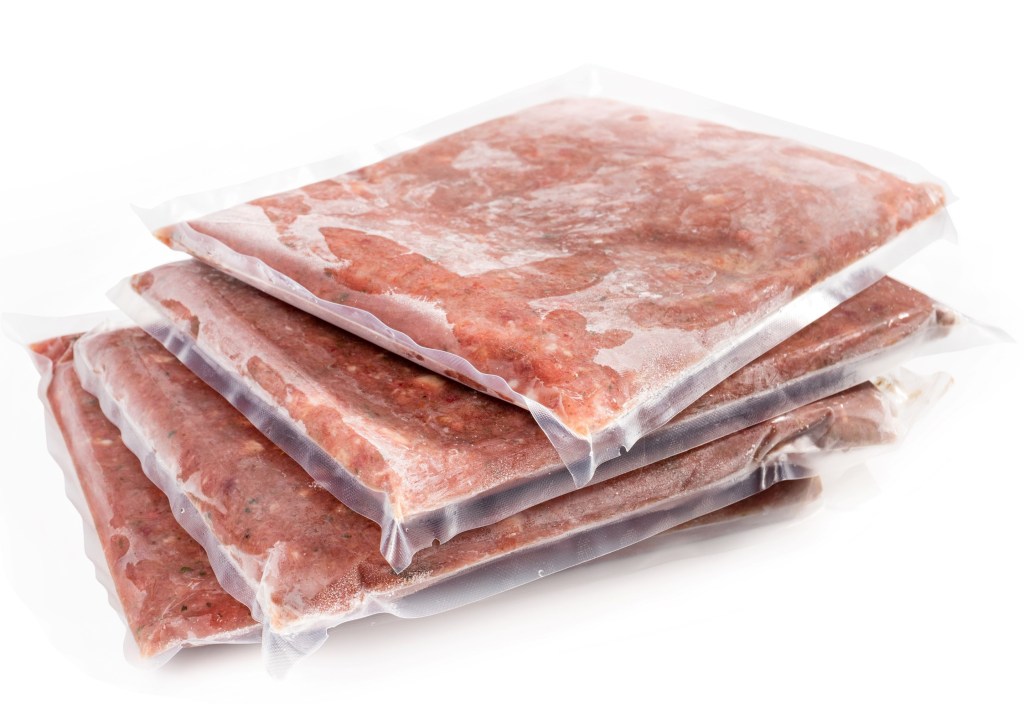
- Effectiveness of HPP: On the good news front, a variety of preservation methods that may reduce risks of contamination in raw dog foods have been studied in recent years. One of the most promising is High Pressure Pasteurization (HPP). HPP is a non-thermal preservation method that is used with a number of human food products and is increasingly used to preserve commercial raw pet foods. The current research supports HPP as an effective processing treatment that significantly reduces a raw product’s bacterial load and is associated with minimal changes to food quality (HPP and Raw Foods). However, HPP is also known to have limitations with certain forms of ground meat products. To supplement HPP, new research is examining other approaches to keeping raw foods safe (Can We Make Raw Dog Food Safe?). Currently, both the FDA and the USDA identify HPP as the preferred method for ensuring food safety in raw pet foods.
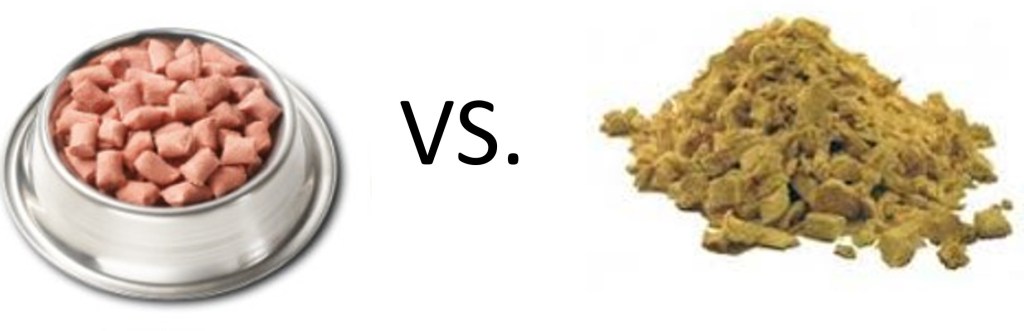
- Freeze-Dried Raw Products: Freeze-drying is a well-accepted food preservation method for many types of foods and is a form of raw pet food that is receiving increasing research attention. A study conducted in 2020 reported that the very low moisture content of freeze-dried raw dog food significantly reduced the survival of food-borne pathogens and total microbial load (Freeze-Dried Raw). More recently, the protein (amino acid) digestibility values of three freeze-dried dog foods were found to be very high and showed low degrees of processing-related heat damage (Protein Quality). A subsequent study by the same researchers compared the freeze-dried products to a frozen raw food made from the same ingredients and found that both the freeze-dried and the frozen foods had high amino acid digestibility values and low indicators of processing-related protein damage (Frozen vs. Freeze-Dried). This information is significant because there is substantial evidence showing that the heat-processing associated with kibble production can negatively affect protein/amino acid digestibility values and can produce unwanted end products (Lysine, Heat Damage).
- Health Claims: A wide range of health claims are made for feeding raw foods to dogs. These include an increase in overall health, body condition and vitality, better skin/haircoat quality, improved dental hygiene, enhanced immune function, and better stool quality, among others. Because long-term studies are difficult and expensive to conduct, it is understandable that measuring such effects is challenging. To date, short term studies of balanced raw diets have found that dogs readily accepted raw foods (in fact, in most cases, raw diets are highly palatable to dogs) and that dogs remained healthy during the feeding period that was studied. However, the same was true for the control dogs fed thermally processed foods. Without additional evidence, blanket health claims about raw foods are currently not supported by evidence (Raw Facts).
Take Away for Dog Folks
So, where does this information leave us?
First, it is important to realize that deciding what to feed our dogs is NOT simply a choice of “raw versus kibble“. If you do not feed raw, that certainly does not land you in the “kibble only” camp. Dog food choices abound today, and include a wide variety of both commercially-prepared products and homemade recipe choices. Thermally-processed foods range from those that are classified as ultra-processed (kibble, canned) to those that are gently-cooked (fresh-cooked, homemade), mildly heat-treated (dehydrated) and freeze-dried. Within these processing categories, one can find those made with pet grade ingredients and increasingly, foods produced with only human-grade ingredients. So, first and foremost, I would recommend exploring all of the many dog food choice options that are available today, weighing the benefits and risks of each.
For those who are dedicated to feeding raw, the evidence that we currently have suggests that feeding a raw diet, in particular one that is in the frozen form, is associated with increased risk of exposure to microbial pathogens and possibly nutrient imbalances. Therefore, it is important to pay attention to the source of the food, to food preservation methods that are used, and to food hygiene habits during preparation.
- If you are feeding a frozen product, select foods only from manufacturers that are using HPP to ensure product safety.
- Pay attention to food recalls and stick with companies that have an admirable food safety history.
- Consider trying a freeze-dried raw product or a dehydrated food. When properly rehydrated, these foods are often highly palatable and the current research suggests that they are not subject to the heat-damage associated with thermally-treated foods. Some are also produced using human-grade ingredients, which is an added benefit.
- Finally, if you are feeding a homemade raw diet, purchase balanced recipes (preferably several) from a reputable canine nutrition service and when possible, use human-grade ingredients for preparation.
Last, an enormous Thank You to the many nutrition researchers who are conducting studies of nutrient content, product quality, product safety and feeding responses to all types of dog foods, including raw!
Citations: Complete citations for all of the studies are provided in the linked Science Dog essays or via a direct link.
Interested in On-Line Learning?
Take a Look at The Science Dog Courses

 The Science Dog
Great article Linda. It’s important to also consider the sustainability and environmental impact of pet foods and what we can do to reduce our pets footprints. Thanks for the wonderful article.
LikeLiked by 1 person
Hi Russ, Yes I agree. Certainly insect protein and some of the new plant-based protein sources are looking like they may be good choices for sustainability. Best, Linda
LikeLike
Hello Linda,
Thanks for this article.
If you’ve not seen this study yet/already, I think it will interest you: https://www.sciencedirect.com/science/article/pii/S0034528823003223?via%3Dihub&fbclid=IwAR0NHyV9NtAK_PyksW_UNYpWzmI30MmCF0hc46pzoNBTFme7l-toAHk11wU#bb0425
All the best,
LikeLike
Hi Melanie, Yes, thank you, I have read it. As I state in the essay, mislabeling problems are certainly not unique to raw products (see links in article). Best, Linda Case
LikeLike
A balanced explanation with evidence where it is available – something that tends to be rare in this particular debate! These days I feed mostly home-cooked, occasionally high quality canned for convenience, and the odd sample bag of kibble for treats. I did feed raw at one point but it was in the days before there was a wide choice of prepared patties with very small dogs it was quite hard work to get enough variety into their diet without filling the fridge with left overs for longer than I liked – plus the constant vigilance to ensure hygiene got me down. Cooking meets my need to be in control of what I feed and the dogs much prefer it and thrive upon it. I too am keeping an eye on environmental impact, though, and may shift to insect based foods once they are more established and the research is in place to support their long term safety and suitability.
Thanks for your excellent blog – it is so helpful to have evidence based discussion rather than opinion and marketing waffle!
LikeLiked by 1 person
Hi Frances, Thanks for your comment and the information about your feeding approach! I am glad that you enjoy the blog – Thanks for your kind words! Best, Linda
LikeLike
I’ve fed my dogs premium kibble, freeze dried raw, frozen raw and gently cooked. I’ve actually found that all 3 of my dogs seem to be healthiest on gently cooked food with moderate to low fat (like Goodness Gracious or My Perfect Pet) and the dehydrated food like Honest Kitchen. Two of my 3 dogs do fantastic on the Honest Kitchen dehydrated, grain free fish recipe. I like to rotate brands and proteins regularly, but the Honest Kitchen grain free fish is my “go to” if one of my pups starts to seem like they’re not feeling their best on another food. It seems to be the easiest on their digestive systems. I’ve found that raw is a bit “rich” for our dogs long term. The fat levels are typically way too high and cause digestive issues. Really, just like for people, it’s really an individual thing to determine which foods works best. Thanks for your ongoing research to fact-find without any “lean” into any particular agenda!
LikeLike
Pingback: 10 Years of Dog Science | The Science Dog