Inattentional Blindness
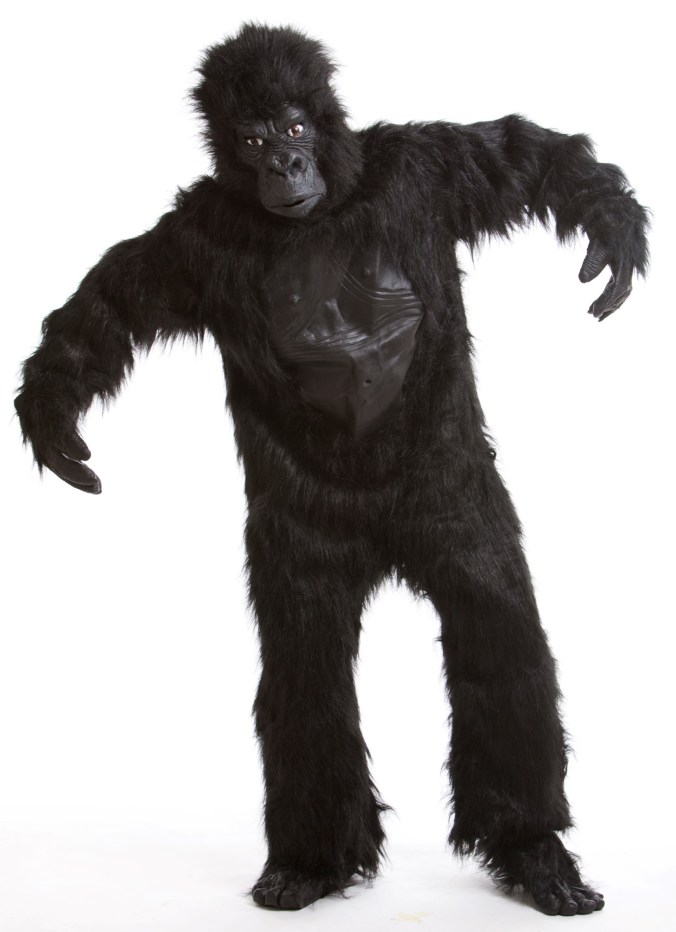
Inattentional blindness (IB) is a cognitive phenomenon that occurs when we experience a reduction in attention to extraneous stimuli (even novel ones) when we are tasked with focusing our attention on something else. In extreme cases, the novel stimulus will not even be perceived. A classic experiment that demonstrates IB was conducted by research psychologists Christopher Chabris and Daniel Simons and reported in their popular book The Invisible Gorilla. Study participants were asked to view a video showing a basketball game and to count the number of times that players who were wearing white jerseys passed the ball to another player. Midway through the video, a person dressed in a gorilla suit walked onto the court, stopped and faced the camera, and then turned and walked off. Afterwards, participants were asked if they had witnessed anything unusual. About 50 percent of viewers completely missed seeing the gorilla! In contrast, the control group was asked to simply watch the video, without counting anything. They, naturally, all reported seeing the gorilla.
Cognitive Benefits of IB
From an evolutionary perspective, a benefit of inattentional blindness is that it allows an individual to focus on relevant and potentially important information in their environment while screening out irrelevant and harmless information. While not infallible, such a process would prevent expending energy on trivial stimuli, and more importantly, allows focus on stimuli that may directly impact an individual’s survival. Knowing this, one would expect that IB may exist, perhaps in varying degrees, in species other than just humans. To date, there is one study showing a tendency to IB in some horses, although the results were not conclusive (1).
Does IB Exist in Dogs?
The existence of IB in the domestic dog would be relevant when training dogs to work in highly stimulating environments. All types of working dogs are required to be highly focused upon their trained tasks. However, most must also be aware of potential hazards around them without becoming distracted or fearful by irrelevant stimuli. These two competencies are continually at odds with each other. Therefore, if IB can be easily elicited in a trained working dog (or a performance dog in dog sports), this is an important cognitive pitfall for trainers to be aware of.
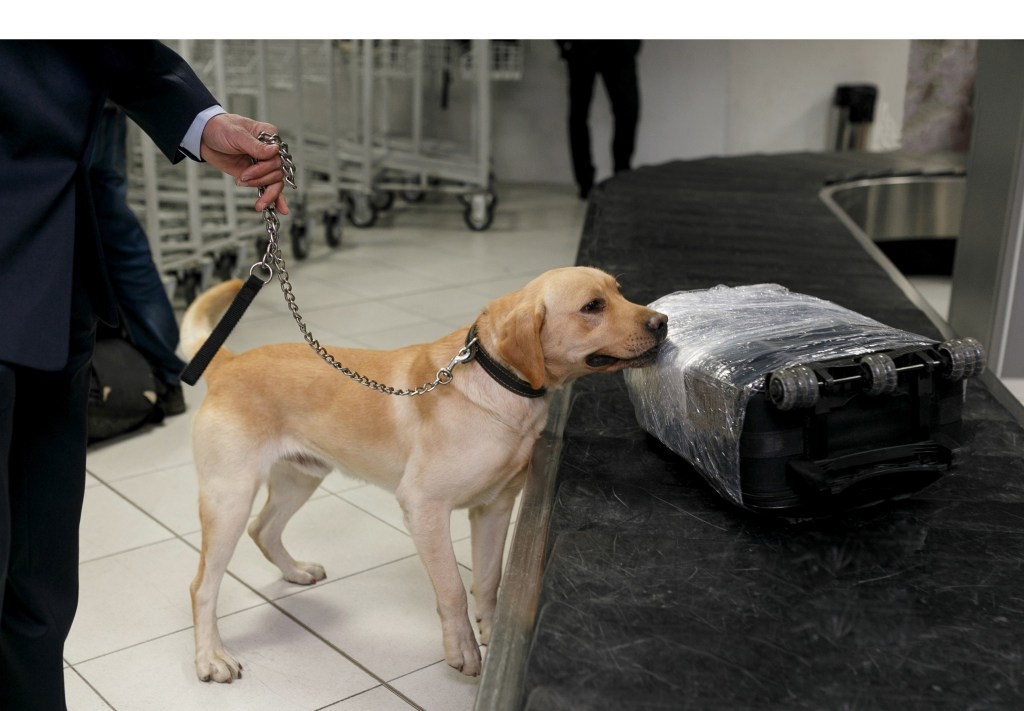
To test IB in dogs a group of researchers at the Canine Performance Sciences Program of Auburn University College of Veterinary Medicine set up a study to examine whether Labrador Retrievers who were trained for odor detection work were susceptible to IB when asked to perform a simple exercise (2).
The Study
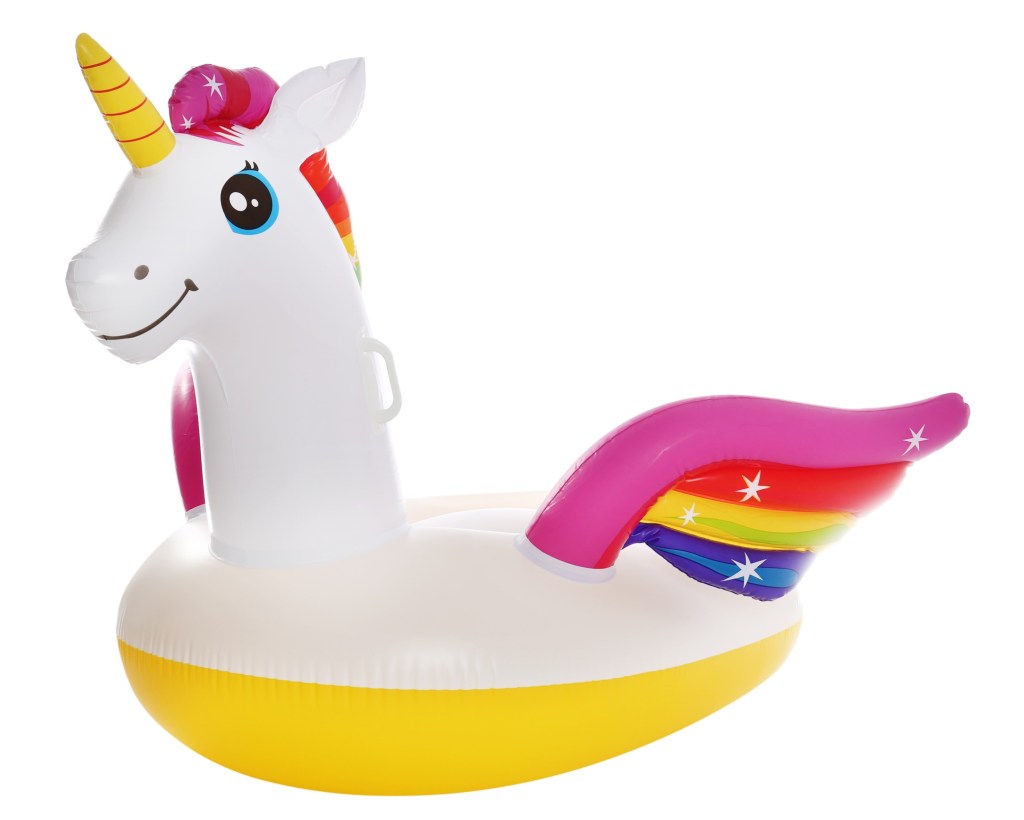
The researchers hypothesized that dogs trained to expect a reward in a specific context would demonstrate inattentional blindness when a novel stimuli was suddenly introduced. Twenty-four dogs were first trained to run down a corridor on cue. Following acquisition of the behavior, half (n = 12) of the dogs were rewarded with a high-value toy at the end of the corridor (the IB group), while the other half (n = 12) continued to perform the task without anticipation of a reward. After 5 repetitions, a novel object was placed in a side door opening halfway down the hallway. The novel object was a small, inflatable dragon.
All of the dogs repeated the task (running down the hallway) for two trials and their responses were videotaped and analyzed.
Results
If dogs, like humans, experience IB, it was expected that introducing a novel stimulus in situations in which the dogs were highly focused would lead to a reduced ability to notice and react to the new stimulus. This is indeed what they found:
- Percent of Responses: Out of 48 trials (runs down the hallway) in which the inflatable dragon was present, dogs reacted to the toy on 11 instances (23 %). All of those 11 responses occurred in dogs who were in the control group (i.e. not focused on a reward).
- Dogs: When measured within dogs, six dogs in the control group responded to the dragon and six dogs did not. Conversely, none of the 12 dogs in the IB group responded to the dragon.
- Sex Effect: Of the dogs who responded, male dogs were significantly more likely to notice the toy dragon than were female dogs. (Editorial Note: This analysis was a small number of dogs, so the difference should be viewed cautiously).
- Conclusions: The researchers concluded that dogs who are highly focused on a specific task are likely to demonstrate inattentional blindness and will not respond to the sudden presentation of a novel and unexpected stimulus.
Take Away for Dog Folks
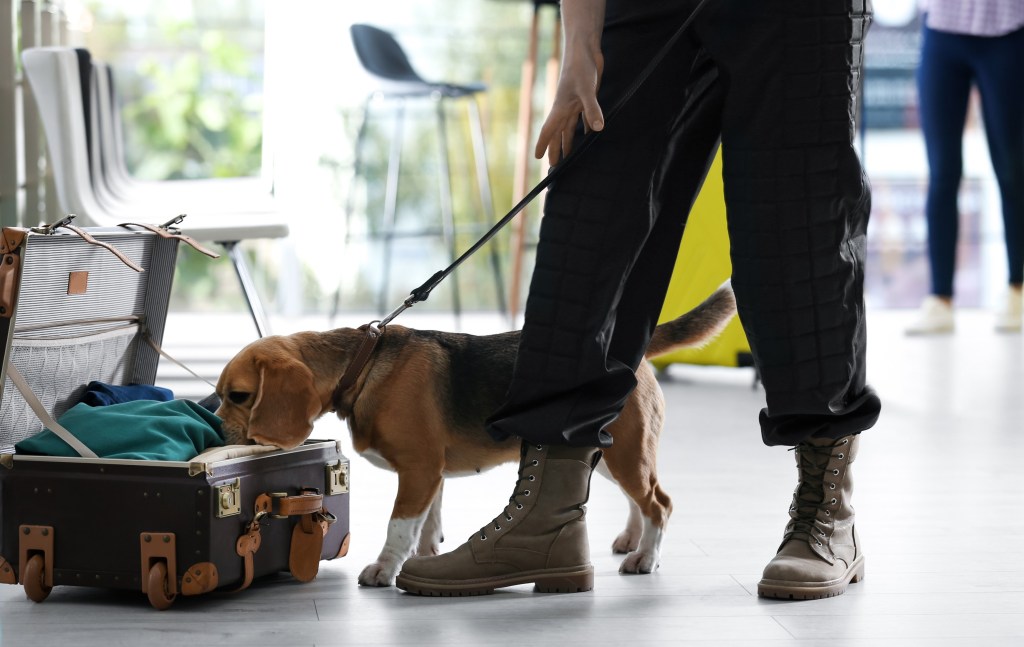
This research is the first to show that dogs, like humans, demonstrate inattentional blindness. They may not notice the gorilla (or the dragon), when they have been asked to focus on a specific task. This has implications for both working dogs and for pet dogs who are trained to participate in a variety of dog sports. Many working dogs are trained to search an environment and to identify the presence of a particular odor or object in that environment. In other words, we expect them to focus, yet also exhibit enough distraction to notice novel items that should be included in their search. A dog who is too highly focused and tends to exhibit IB may miss important stimuli that she should be reacting to. Conversely, a dog who is easily startled or distracted from his task may not be capable of focusing adequately to be successful. A balance is clearly needed between these two motivations. While the consequences may be less serious in sport dogs, acknowledgement of an individual dog’s tendency towards IB can certainly help trainers when setting up their training programs.
The authors of the study suggest that being aware of the tension between these two requirements – training a dog to be highly focused on a designated task versus asking the the dog to attend to the local environment – can beneficially inform our training practices. For example, while most trainers expose their dogs to multiple and varied environments while performing the trained tasks, it may be equally important to expose them, on some occasions, to the different environments when they are not being asked to perform. Such an approach during training may prevent the development of IB, while still providing beneficial socialization and habituation.
A second use of this information has to do with the selection and/or the assessment of working (or performance) dogs. Although the sample size was small and limited to a single breed of dogs, these results suggest that there is a great deal of individual variation in a dog’s tendency to show inattentional blindness. Striving for a balance between the ability to focus and continuing to attend to environmental stimuli is a criteria that may be important during the early selection process of dogs, as well as throughout training.
It is an easy and simple test. Give it a try with your own dog(s) and let us know in the comments section if your dog noticed the Gorilla!
Happy Training!
Cited Studies
- Gabor V, Wall S, Gerken M, Brinkman I. Does inattentional blindness occur in horses (Equuss caballus)? Applied Animal Behaviour Science, 2019; 215:45-51.
- Cox E, Krichbaum S, Smith JG, Katz JS, Lazarowsi L. Inattentional blindness in dogs. Applied Animal Behaviour Science, 2023; 266:106030.

Study with Us at The Science Dog Courses!
Completely on-line and on-demand courses and webinars for dog owners and pet professionals.
Two Masters Class Certificate Programs!

 The Science Dog
Only if she smelled it. 😉
LikeLike
Pingback: When you are hyper focused… What sort of things do we miss? Maybe a Gorilla! – My Blog
Dr. Richard Wiseman (author of “The Luck Factor” etc.) used the Gorilla video to explain, in part, people’s experience with good or bad luck. In his research, he found that people who self-described as having good luck were likely to spot the gorilla and those who self-described as having bad luck were unlikely to see the beast. Perhaps IB restricts people’s ability to spot danger or opportunity.
BTW, there’s a second, updated version with a twist. Search for a Youtube video, “The Monkey Business Illusion” and see (or miss) what happens.
LikeLiked by 1 person
I thought there would be a conclusion regarding the effectiveness, or not, of using obedience or pattern games to reduce reactive dogs’ noticing their trigger…
LikeLike